“There are some steps available to central government such as the appointment of an observer or the replacement of a council with commissioners … but that tends to be used as a last resort and only after ministerial intervention.” The agency he suggested would be set up like the Public Service Commission, “with the ability to provide early, proactive support for local government and effective advice to ministers when issues arise” . . . → Read More: Article: Calls for ‘department for local government’ to oversee councils
|
||||
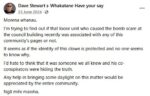
Our world needs to know that friends can disagree and still be friends. We can have strong disagreements and still be friends. It’s because we are friends that we can disagree. This is my message to the Whakatane Community – let’s remember that, at heart, we are all human and count on each other. We need to heal our divisions. . . . → Read More: Navigating Difficult Questions The cost of water services would be going up a lot, Kircher said, but less so under a joint model. Now, keeping the services in-house, his council’s total rates take would have to increase by 25% next year, and a further 30% the year after. The council would be reviewing its long term plan to find savings and lessen this. . . . → Read More: Article: About 40 water entities emerging in Government water regime  Comments are closed Comments are closed  Election 25, From The Press, News Clippings, Three Waters Election 25, From The Press, News Clippings, Three Waters  rates, rates increases, whakatane v wellington rates, rates increases, whakatane v wellington Win 4 hours of handyman labour in the Whakatāne / Ōhope area simply by buying a raffle ticket and at the same time support the campaign to get Dave Stewart elected to the Whakatāne District Council To enter either buy a ticket at the Dave Aid Concert on August 2nd or secure your tickets . . . → Read More: Fundraiser Raffle – Win 4 Hours Of Handyman Labour in Whakatāne / Ōhope “We all want lower rates increases. I want lower rates increases, I know you want lower rates increases, I hear from my community they want lower rates increases. But it can’t be at the expense of our children picking up the tab because of our negligence today.” The Selwyn mayor tells Newsroom a key problem is councils have few alternatives to raise money. The best tool the Government could give councils, in his opinion, is to return GST spending on new houses locally. “That would be a game-changer for us,” he says, noting between 1000 and 3000 houses have been built each year in Selwyn over the past five or six years. . . . → Read More: Article: Govt winds up council reform storm OPINION: What do we do about 78 councils, rising rates and the need to improve efficiency and focus on the basics? Some argue the Government should simply pass a law to cap rates and let ‘the market’ sort itself out. But history tells us blunt interventions often generate unintended consequences. When councils have focused purely on rate minimisation in the past, they’ve generally cut infrastructure maintenance, inspections and deferred capital investment, contributing to a significant proportion of New Zealand’s $200 billion infrastructure deficit. Government wants to grow the economy and speed up housing development. Yet, ironically, it needs councils to enable housing growth, through investments in roads, water, transport and other essential services. Capping rates without addressing the funding model simply kneecaps councils’ ability to invest. Without money, projects don’t proceed and assets deteriorate. . . . → Read More: Article: The argument against council rate caps Comments are closed Election 25, From The Press, News Clippings, Other council reform, rates, rates increases, whakatane v wellington “Having created a situation where councils are being forced to put up the rates to pay for things like water infrastructure, the government’s now trying to blame them for doing something that they really don’t have a choice but to do. “Ultimately if the government don’t want councils to increase rates, they’ve got to find another way of funding the water infrastructure that we need.” Local Government New Zealand president and Selwyn District mayor Sam Broughton said rates capping could be “disastrous for communities” and leave councils without the means to fund essential infrastructure. . . . → Read More: Article: Capping rates rises would make things ‘worse not better’ – Chris Hipkins Comments are closed Election 25, From The Press, Podcasts, RNZ LGNZ, rates, rates increases, whakatane v wellington Councils are getting around 10% of their budgets from Crown grants when in other countries it’s more like 15-20% or more. Or, as the S&P analyst says, “you’re told to do more infrastructure spending, and you’re getting less support”. This is the opposite of localism and resetting the relationship between central and local government that Christopher Luxon and National campaigned on two years ago. Instead, giving the housing minister the power to override democratically elected council decisions, even if it’s an interim measure ahead of new RMA laws, smacks of subverting the democratic process. And it’s those changes to the Resource Management Act that the coalition Government is itching to get completed because it presents a compelling reason to get rid of the country’s 11 regional councils. . . . → Read More: Article: Coalition finds a handy distraction in council bashing “I care for our district and I want to see thriving communities for all peoples – and this means making difficult, thoughtful, future-focused decisions within a constrained council budget. These decisions are never black and white. Good decision-making relies on balancing competing priorities for the benefit of all.” “I have a solid understanding of local government through Community Board work, and through my time on the National Community Boards Executive Committee. We’ve been advocating for community boards to be harnessed and supported to be a more effective tool for better local decision-making.” . . . → Read More: Article: Council or bust for community board stalwart The other major issue is the whole funding structure for local government. Which is why I think the Government is taking a very narrow approach here. How on earth the Government thinks it could put a cap on annual rates increases without looking at the wider issue, I don’t know. And that wider issue is the fact that local councils are being asked to do more and more under their own steam, without any extra funding to make it happen. Example: the Government wants more tourists coming here, but what about the infrastructure needed to support that growth? The Government doesn’t pay for that. Local councils do. . . . → Read More: Article: John MacDonald: Capping council rates isn’t a solution “After the local body election the successful Whakatane District Council candidates will have to work together so we’re saying, ‘why wait?’ “Let’s get things started before the election and show Whakatane we can work together despite our differences.” . . . → Read More: Article: Working together despite differences 
So essentially they’ve made central government smaller, dumped a shipload of work onto ratepayer funded councils, and now they’re going to make sure councils spend ratepayers money doing the government work so said government can look good? . . . → Read More: PM Christopher Luxon open to scrapping regional councils amid RMA reform For a prime minister who is often accused of having no ideology, localism is one thing Luxon deeply believes in. “Centralism over localism doesn’t work,” he told parliament last year. He described centralisation as “a robbery of power and control from local communities.” He reiterated it in his impressively boring speech at Waitangi this year: “We, like you, believe in localism and devolution, not centralisation and control.” Localism is a belief that unites all three parties in the coalition. It’s arguably the biggest point of difference between this government and the previous Labour government, which made moves to centralise health, polytechnics, water and the public service. . . . → Read More: Christopher Luxon loves localism, until locals have the wrong opinions Many of the managerial techniques that have arrived in the public sector over the austerity years – such as results-based pay, corporate contracting, performance management or evaluation culture – have their origins in a budgetary revolution that took place in the 1960s at the US Department of Defence. In the early 1960s, Defence Secretary Robert McNamara was frustrated with being nominally in charge of budgeting but having to mediate between the seemingly arbitrary demands of military leaders for more tanks, submarines or missiles. In response, he called on the RAND Corporation, a US think tank and consultancy, to remake the Defence Department’s budgetary process to give the secretary greater capacity to plan. . . . → Read More: Despite decades of cost cutting, governments spend more than ever. How can we make sense of this? 
Māori wards and constituencies are vital to local decision-making and have many benefits for our communities. However, we have to vote in the upcoming local body elections to retain them. This two-page resource provides trustworthy information on: Why we have Māori wards and how they work The key issues now How our communities benefit from Māori wards Actions you can take to retain Māori wards . . . → Read More: Māori wards Explainer – What’s happening and what you can do 
The broken funding model that is causing ratepayer pain needs to be fixed and it’s not simply a case of closing the library or increasing tipping charges and selling the Aquatic Centre. Ratepayers need to demand better quality decisions and choices by central government. . . . → Read More: Article: The local government funding model is broken ‒ but can be fixed New Zealand’s rising rates are primarily due to increasing costs for local councils, including infrastructure upgrades, population growth, and inflation, leading to higher rates to fund essential services and meet community needs. . . . → Read More: The Real Reasons Behind New Zealand’s Rates Increases
Yet another case of Big Brother Government in Wellington telling local councils what to do with huge costs associated and no funding – yet more of the multi-million dollar rip off that Wellington bureaucrats throw at ratepayers, who they clearly see as a bottomless ATM “Councillors have been astounded by the inflexible parameters, risks to children and others’ safety, and the potential extra costs of consultation and physical safety enhancements. Auckland Council and Auckland Transport both opposed the Government’s automatic raising of speeds back to 50 km/h but the rule came into force anyway. AT already estimated publicly the road and sign changes could cost it $25m, which the Govt refused to subsidise.” . . . → Read More: Untangling the hidden costs of driving faster past schools 
Eroding the power of Te Tiriti o Waitangi — whether explicitly or implicitly through laws such as the Regulatory Standards Bill — has serious strategic, legal, and economic consequences for Aotearoa New Zealand’s trade agreements and exposure to ISDS cases. Here’s how and why: . . . → Read More: Opinion: Regulatory Standards Bill – what you need to know. Dr Mawera Karetai
Let’s demand courage. Vision. Long-term thinking. A mayor and councillors who are eager to work together for all of us — motivated not just by managing the now, but by building a strong foundation for the future. Let’s be honest about the challenges, and clear-eyed about the kind of community we want to be. Let’s vote for leaders who can hold this nuance — honestly, logically, and compassionately. Because ultimately, the four wellbeings weren’t just policy. They were a reminder of what really matters. And whether they stay in law, they must stay in our decisions. . . . → Read More: Opinion: Yes, let’s not forget what councils really do. Becs Mackay |
||||
| Copyright © 2026 Exposures – The Blog - All Rights Reserved | ||||